
Saving Lives and Liability
Improper hand hygiene contributes to healthcare-associated infections (HAIs), which cause approximately 75,000 deaths annually and cost hospitals billions in extended stays, treatments, and settlements. Automated monitoring enables facilities to improve performance and protect patients from preventable harm.
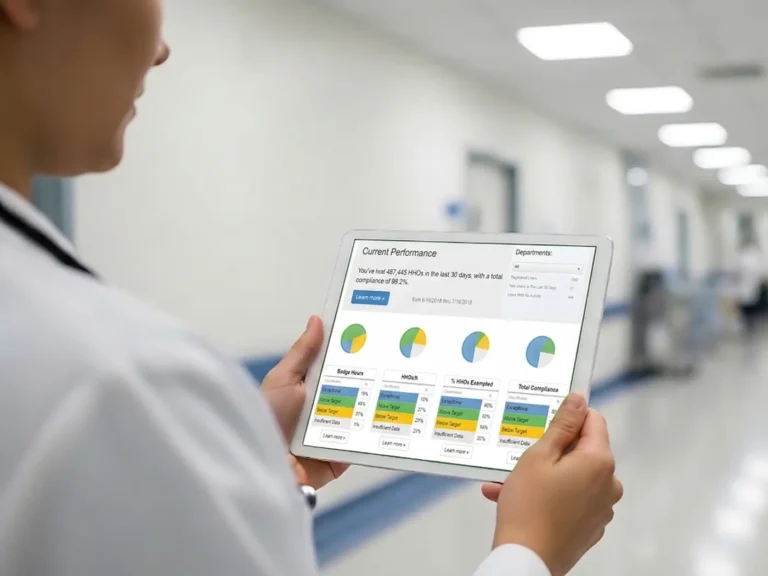
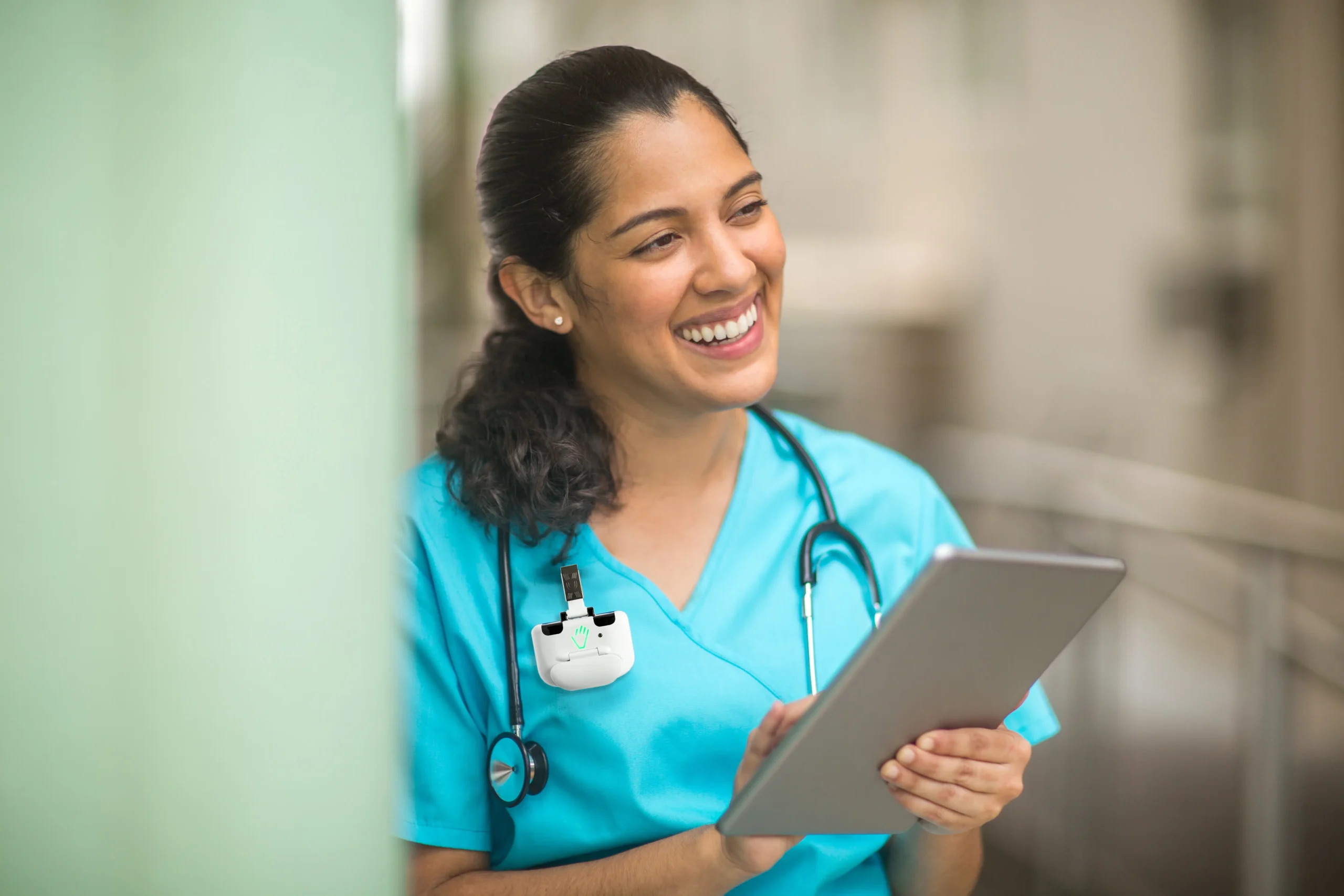
BioVigil’s system is saving lives and protecting hospitals from liability by transforming hand hygiene into a measurable, accountable, and proactive infection prevention tool. By driving sustained 97%+ compliance, it dramatically reduces healthcare-associated infections, safeguarding patients from preventable illness. Real-time cross-contamination alerts stop potential pathogens from traveling between patient rooms, preventing exposure before it occurs.
Because BioVigil captures entry/exit times, hand hygiene timing, and individual-level compliance data, hospitals can document proper staff rounding and respond to claims with objective evidence. Partners have used BioVigil data to mitigate potential lawsuits and demonstrate adherence to safety protocols. (For example, a patient fell and claimed they were on the floor for an hour, but we showed in the data suite it was only 17 minutes between staff coming into the room).
Time-stamped, individual-level compliance data provides hospitals with verifiable documentation to defend against HAC penalties, survey deficiencies, and legal claims, turning hand hygiene from a compliance obligation into a strategic safety and liability management advantage.
Because of this, sustained compliance and infection reduction have helped hospitals avoid HAC Reduction Program penalties and improve quality scores tied to Leapfrog and Joint Commission.
HAI Impact
BioVigil transforms hand hygiene into a fully automated, high-impact infection prevention strategy. By driving sustained 97%+ compliance, the system reduces risk at every patient interaction.
Partner hospitals using BioVigil have achieved measurable reductions in healthcare-associated infections, including C. diff, CLABSI, and CAUTI, by reinforcing proper hand hygiene protocols at the point of care and preventing cross contamination before it occurs.
Beyond improving patient outcomes, reducing infections lowers excess costs, protects quality scores, and frees up capacity to care for more patients. Across BioVigil’s client base, the average sustained HAI reduction reached 43% in the most recent calendar year. Peer-reviewed research has demonstrated reductions of up to 83%, highlighting the significant clinical and operational impact of a single, intelligently applied solution.
compliance
HAI reduction
C. Diff
CLABSI
CAUTI
Cross Contamination
BioVigil helps prevent cross contamination by addressing risk at the point of care. It intervenes before that risk leads to patient harm.
When a caregiver exits one patient room and enters another without performing hand hygiene, the badge issues an immediate alert through visual, audible, and vibration cues. This real-time prompt encourages corrective action before patient contact occurs. It helps reduce the likelihood of room-to-room transmission, which is one of the most common pathways for HAIs.
At the same time, BioVigil captures precise data on room entry, exit, and hand hygiene activity. This gives infection prevention teams clear visibility into cross-contamination patterns. With this insight, teams can identify trends, intervene earlier, and reinforce protocols. What was once an invisible risk becomes measurable and manageable.
Rapid Contact Tracing
Without automated monitoring, infection preventionists must manually review charts and staffing records to determine which healthcare workers interacted with which patients, a process that can take days and may still lack precision.
- BioVigil captures detailed, individual-level data including time of room entry, time to hand hygiene compliance, type of hand hygiene performed, time in room, and time of exit. This data allows infection prevention teams to map exposure pathways quickly and accurately.
- Facilities using BioVigil have identified dozens of contacts related to an exposure event within minutes, compared to traditional methods that require days to compile the same information. This rapid insight supports faster patient isolation, earlier treatment, and improved outbreak control.
- BioVigil’s data suite enables healthcare organizations to proactively prevent infections through real-time reminders and corrections at the point of care. But when cross-contamination does occur, it accelerates investigation and mitigation by quickly identifying sources and potential exposures. This helps minimize disruption while protecting both patients and staff.