
Smart Technology Has Reshaped Healthcare
Hospitals are operating in an environment where outcomes, efficiency, and accountability are constantly measured and scrutinized. Rising infection rates, workforce shortages, and performance-based reimbursement models have exposed the limits of traditional processes.
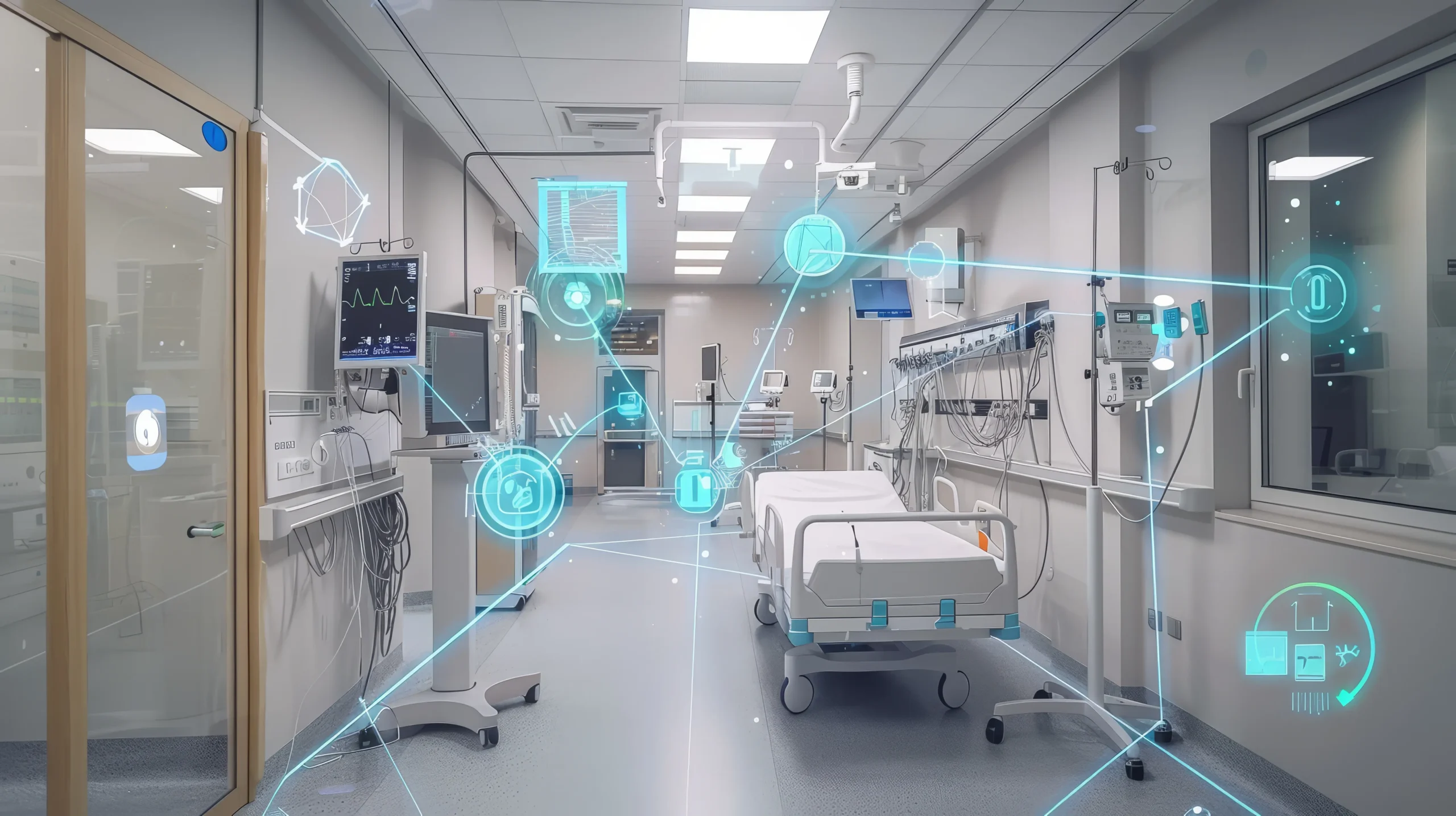
In response, health systems are investing in technology not simply to digitize workflows, but to close critical gaps in visibility, consistency, and control at the point of care. But not all technology delivers value. The systems driving meaningful improvement share a common thread – they don’t just collect data, they change how care is delivered in real time.
Hand Hygiene: A Critical Gap Hidden in Plain Sight
Beyond the human impact, the financial and legal stakes are equally profound. Preventing infections means avoiding costly complications, penalties, and litigation. In a healthcare environment where outcomes define reputation and reimbursement, BioVigil transforms compliance into a powerful safeguard—protecting patients, empowering caregivers, and shielding institutions from avoidable harm and liability.
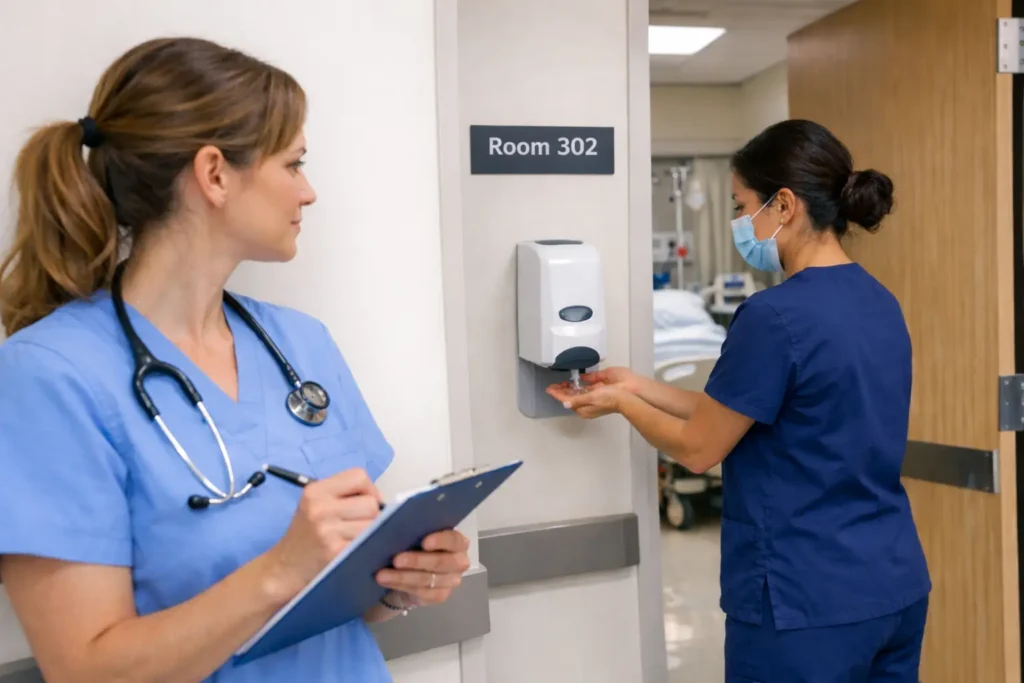
Hand hygiene remains the single most important behavior in preventing infection, yet it is one of the least accurately measured. Most hospitals report compliance rates above 90%, but in reality, performance is often closer to 50%.
This disconnect is due to limitations in how compliance is measured. The problem starts with direct observation, which:
- Captures less than 1% of hand hygiene opportunities
- Provides only moment-in-time snapshots, with no ability to track behavior patterns or trends over time
- Is influenced by the Hawthorne Effect, where behavior changes when staff are being watched
- Introduces observer bias, with results varying based on who is observing and how compliance is interpreted
The outcome is a false sense of confidence. Hospitals believe they are performing well, while critical gaps in behavior remain unseen.
Electronic Systems: Progress with Limitations
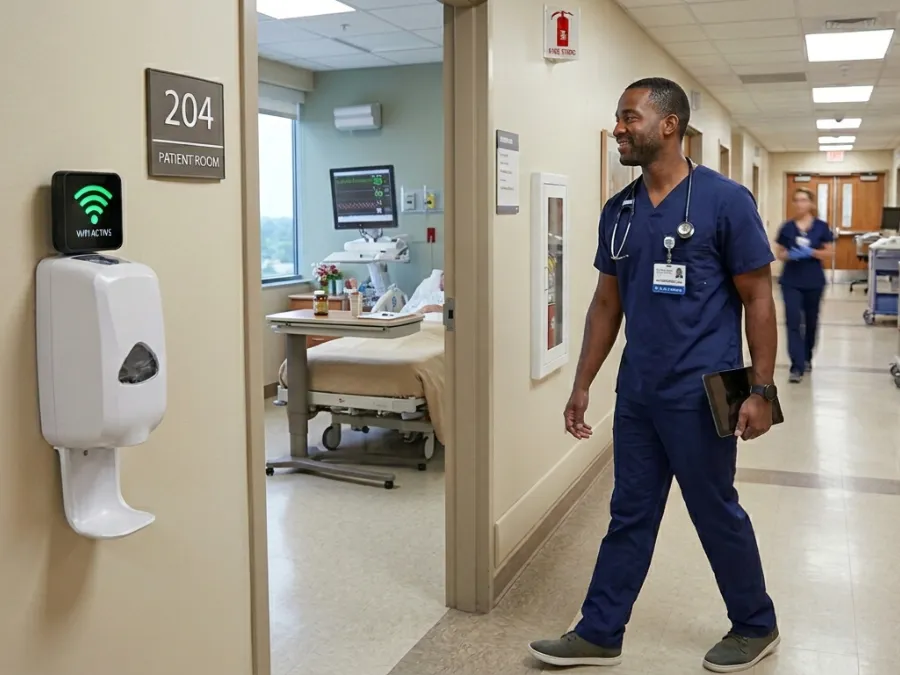
Electronic monitoring systems were introduced to close this gap, and represented an important step forward. However, most systems are built on incomplete assumptions. Rather than measuring behavior, they focus on tracking dispenser activity. This created new challenges:
- No confirmation that hand hygiene actually occurred
- Staff receive no real-time feedback to correct behavior
- Systems provide data, but not actionable insight
For many organizations, this results in frustration – investments are made, but meaningful improvements are limited.
Defining the New Standard
Hand hygiene is NOT something that can be estimated through sampling or inferred through indirect data. It must be accurately measured, actively managed, and continuously improved. The new standard requires:
Verified compliance
Hand hygiene events must be confirmed, not assumed, at the individual level.
Protocol-based intelligence
Systems must support clinical realities, including isolation requirements and handwashing protocols.
Real-time feedback
Caregivers need immediate prompts that support behavior in the moment, not after the fact.
Seamless integration
Technology must fit naturally into workflows without disruption or additional burden on staff or IT.
Complete visibility
Every interaction, across every shift, must be captured to provide a true picture of performance.
BioVigil Sets the Benchmark
Many systems attempt to address these challenges, but fall short in delivering complete visibility, real-time feedback, and true accountability. BioVigil fully meets these requirements, providing verified compliance, continuous monitoring, and immediate behavior correction at the point of care.